What to Reflect About as the Year Is Ending?

What to Reflect About as the Year Is Ending?

December 1, 2025
By Huy Ing Lay
2 mins
48 Views

The year rolled by so fast, suddenly it’s December, the last stretch of 2025. And I know that if I don’t pause and sit with myself, I’ll just keep moving without really understanding what has been happening inside me. So maybe this is the moment to stop for a while. To breathe. To look inwards. And if you want, I invite you to do the same.

It can feel overwhelming to think about an entire year. Honestly, who has the energy for that? But maybe reflection isn’t about reviewing everything. Sometimes it’s simply giving yourself a quiet moment to notice what stayed with you, what shaped you, and what softened or hardened in you without you fully noticing. Because so much of what changes us doesn’t happen loudly. It happens in small shifts, quiet undercurrents, the subtle ways we respond to life.

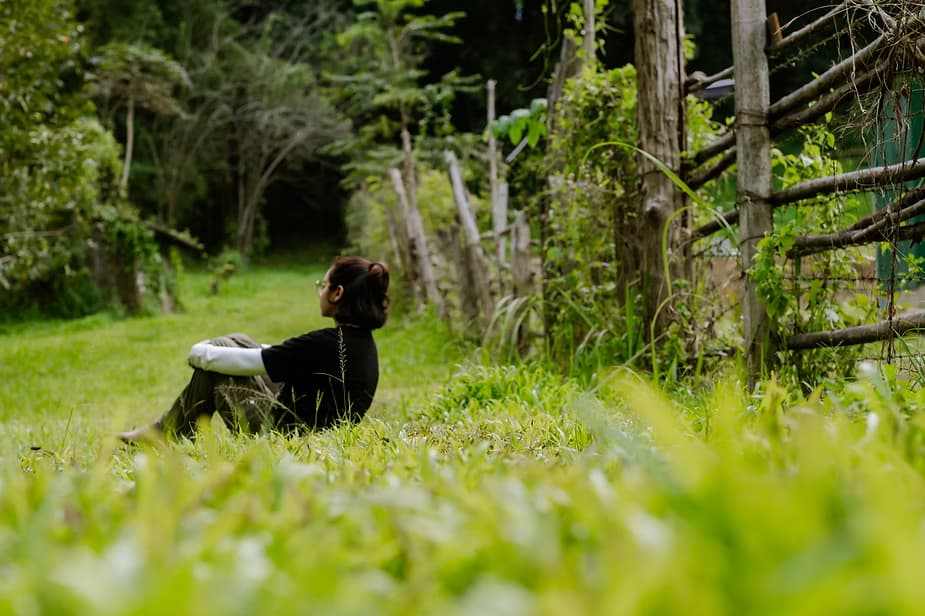
As the year moves into its last month, return to yourself gently, maybe to sit under a tree, maybe by a window where the light feels kind, or lying on your bed when everything is finally quiet. Let these questions rise slowly, without trying to force an answer.
e03823_b76abf82d12f40ff815413d7397715c0~mv2.avif
So much of what changes us doesn’t happen loudly. It happens in small shifts, quiet undercurrents, the subtle ways we respond to life.

Where did I grow, even if no one else saw it?

Not all growth becomes a big moment. Sometimes it’s the slow dissolving of an old fear. The way you didn’t abandon yourself this time. The decision to rest, to walk away, or to speak a truth that felt too heavy in your mouth. Growth can be private. Quiet. Invisible to anyone but you.


What did I carry that was heavier than I realized?

This year placed things in your hands you didn’t ask for and that can be expectations, disappointments, unspoken sadness, pressure to keep going. Some of these things don’t need to follow you into next year. Some of them deserve to finally be put down.


What moments touched something real in me?

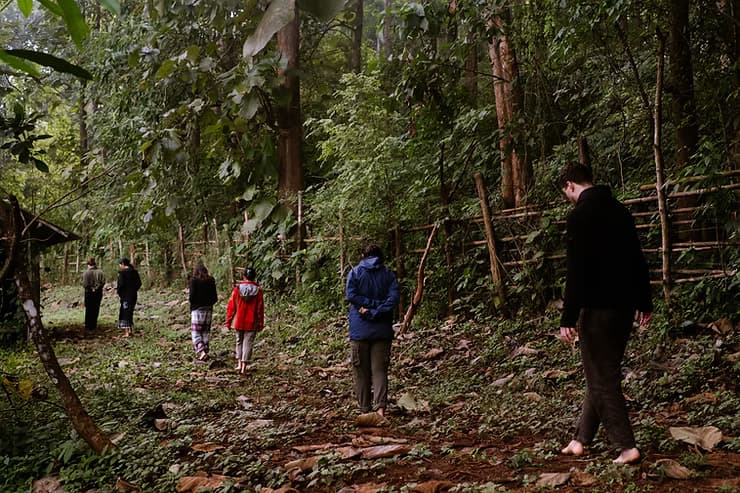
Maybe a conversation that lingered. A walk in the forest that felt like a breath. A connection that scared you because it woke something inside you. A sunrise or sunset that reminded you of something you didn’t know you missed. These moments are anchors. Let them speak. Let them stay with you.


And as you reflect, be honest but kind with yourself. Notice where you could have been gentler, clearer, more courageous and then meet that honesty with compassion. Reflection isn’t about judging yourself. It’s about listening to the truth of your own experience.


Some memories might be uncomfortable. Some stories may feel unfinished. There’s wisdom hidden inside the things we avoid, inside the parts of ourselves we are still slowly learning to love. In this gentle looking back, you may find a soft clarity about what you’re ready to carry forward and what you’re finally ready to release. 

Huy Ing Lay

Author

Huy Ing Lay

Related Articles

Nature Praxis: Understanding the Essentials of Ecotherapy

Nature Praxis: Understanding the Essentials of Ecotherapy

What if better mental and physical health could be found not in the next downloadable app, the next hack, or the next Instagram post, but in something very simple: going outside and remembering that you are part of the living world?

Dirk Reber6 mins
Grounding in Nature When Things Feel Overwhelming

Grounding in Nature When Things Feel Overwhelming

Entering nature does not always happen from a place of calm. Often, it happens during moments of overwhelm, when thoughts race, when the chest feels tight, or the body becomes numb or disconnected. In times of uncertainty, loss, or sudden change, emotions can be difficult to name, like a river mixed with mud where the water turns unclear. The mind feels crowded, the nervous system overstimulated, and what becomes clear is the need for space where something steady to hold a body and mind under strain.

Huy Ing Lay5 mins
The Five Profound Lessons I Learnt from Slow Trekking

The Five Profound Lessons I Learnt from Slow Trekking

We live in a world obsessed with speed such faster internet, faster commutes, faster promotions. But what happens when we deliberately hit the brakes? That’s the question the philosophy of slow trekking answers. It’s a purposeful counter-movement to the relentless hustle of modern life that I experienced from my slow treks and I would like to introduce it to you! The goal of the unhurried trek isn't about crushing miles or conquering the summit. It’s about shifting the focus from covering distance to truly experiencing the present moment—Being in the Presence. By choosing this gentle pace, I didn't just walk through nature—I truly inhabited it, felt it which helped me unlock lessons that stick with me long after I am back to the human-made world. The fundamental, life-changing lesson of slow trekking is the mastery of mindfulness. In our daily lives, our brains are usually on autopilot, running a loop of planning the future or dwelling on the past. But when the pace is gentle, our goal changes. The summit is irrelevant but the experience of each step is everything. This simple act of deliberate deceleration forces our senses to wake up. I noticed the texture of the soil beneath your boots more than my usual hike/ trek. I actually smelled the damp scent of the forest more and I felt the rhythm of my breathing and heartbeat louder. Anchoring my attention to the present moment trained my mind to develop a heightened awareness of both my surroundings and my inner self. It made my life feel richer and more engaged. If you feel like you’re always "on," you’re not alone. Modern life keeps our nervous system in a state of chronic low-level alert. Slow trekking is the powerful antidote we desperately need. By intentionally ditching the phone and disconnecting from daily pressures, we allow the body’s constant stress response to finally stand down. The slow, rhythmic motion of walking, combined with being deep in a serene, natural environment, signals safety to the brain. This is where the magic happens, your nervous system literally shifts. It moves out of the draining "fight or flight" state and into the restorative "rest and digest" state. The core lesson here? For genuine healing and long-lasting energy, intentional rest is an essential, not a luxury. We can't think deeply when we're rushing because our minds are too busy with practicalities and physical exertion. The gentle pace of slow trekking, however, creates a precious mental vacuum—a space for introspection. The unhurried trek transforms into a form of moving meditation. It allowed my complex thoughts, nagging problems, or overwhelming emotions to surface naturally, giving me the time to examine them without feeling rushed. This intentional slowing creates the necessary mental bandwidth for deep problem-solving and gaining fresh perspectives on life's challenges. The revelation is that clarity doesn't come from frantically seeking external advice; it comes from providing the inner stillness necessary for your own quiet wisdom to be heard. When we "fast trek," nature is often just a pretty backdrop for a workout or an achievement. Slow trekking transforms it into an intimate partner. This change in speed fosters a profound appreciation and bond with the natural world. I started to notice the intricate details such as the tiny lives and ecosystems, the incredible resilience of a single plant, and the connections woven throughout the wilderness. This lesson is one of humility and belonging. By fully immersing myself by touching the rough bark or truly listening to the sound of wind blowing through leaves and moving water—I shifted from being merely an observer of nature to recognizing myself as an integrated part of its flow. This deep connection is a powerful, reliable source of peace. Another most valuable takeaway is the opportunity to reclaim my inner rhythm. Modern life is often dictated by external forces—clocks, deadlines, and notification pings. Slow trekking allowed me to learn the rhythm of nature instead, which is wonderfully deliberate, non-linear, and restorative. Moving at a slower, more deliberate pace taught my mind and body how to align with a more authentic and sustainable flow. I was able to discern between real urgency and the false hurry of the outer world thanks to this realignment. Instead of living at a fast pace, I've learned to set a tempo in my everyday life that genuinely appreciates my energy and well-being.

Souheang Ly3 mins
Lessons from Water: Flow

Lessons from Water: Flow

There’s something quietly profound about the way water moves. It never resists where it’s meant to go. Instead, it curves around rocks, slips through the smallest cracks, and keeps moving, no matter how many times it’s blocked. To flow, for water, is to live. When we watch a river or a stream, or even the still mirror of a pond, we witness the rhythm that guides all living things. Water doesn’t rush to reach the ocean, she trusts gravity, time, and terrain and those are the unseen forces that shape the journey. Flow, to water, is not about speed or direction, but about presence and surrendering to what is, while still moving forward, gently, steadily, at her own pace. In our lives, we often fight the current. We cling to identities, plans, and expectations and we try to control what can’t be held. Sometimes we even swim against our own flow, resisting what already wants to unfold, what needs to let go of. But the more we grasp, the more resistance we create. And water teaches a softer way, a way that dissolves rigidity, loosens control, and returns us to something natural, fluid, and alive within ourselves. Flow isn’t passive, it is an embodied awareness knowing when to yield, when to carve a new path, when to rest in stillness. Like the tides that rise and fall, flow invites us to move with the cycles of our own energy: to ebb when we are weary, to surge when life calls us to act. When we align with flow, we become more like the nature of water herself: adaptable, reflective, resilient. And in that realization, we learn that our essence isn’t lost when we change shape. Whether vapor, wave, or rain, water always remains itself, WATER. And maybe that’s the secret of flow: not forcing life to match our will, but allowing life to shape us gently or sometimes sharply, the way a river smooths stone over time, with patience, with trust and grace. And the journey of flowing isn’t one in a straight line, it’s cyclical. It is changing and moving. The same water that falls as rain might rest in a lake for decades, evaporate into mist, drift as a cloud, and return again. This constant transformation simply tells us that change does not erase us. We can shift, soften, expand and still remain ourselves. And perhaps the most beautiful part of flow is its humility. Water doesn’t need to be seen nor she fights for attention. She simply nourishes everything she touches. When she meets a stone, she polishes it. When she meets fire, she cools it. When she meets soil, she gives life. Flow, in that sense, is not only a way of being, it’s also the very way of giving which is a way of being part of something greater than ourselves. Maybe that’s what water has been teaching us all along: that to live is to move, to yield, to become soft enough to be shaped by life, but steady enough to keep going. To trust that even when we cannot see the ocean, we are still on our way there.

Huy Ing Lay3 mins
Share: